Heath Aster
Symphyotrichum ericoides
(formerly Aster ericoides) |
 Other common names:
Heath White Aster, Many-flowered Aster, Tufted White Prairie Aster Other common names:
Heath White Aster, Many-flowered Aster, Tufted White Prairie Aster

Other scientific names:
Aster ericoides, Aster multiflorus, Aster pansus, Aster polycephalus, Lasallea ericoides, Virgulus ericoides
French names:
Aster lisse
Family:
Composite Family (Asteraceae)
Group:
Asters
Distinctive features:
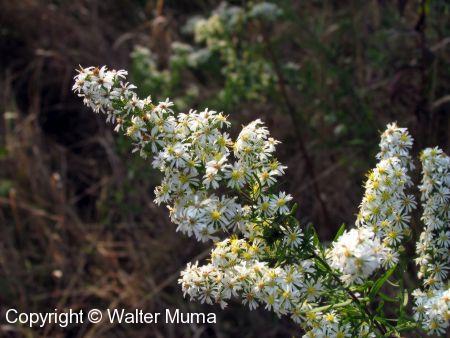
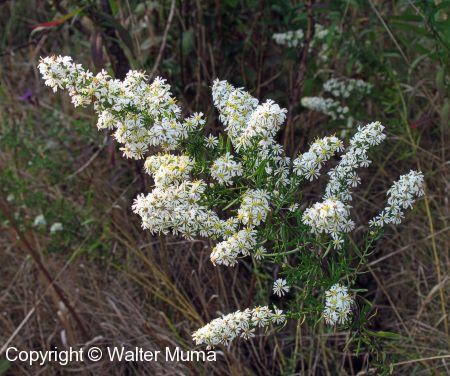
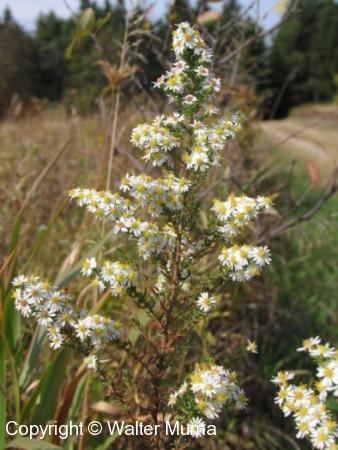
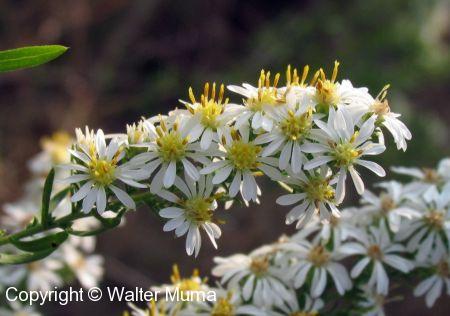
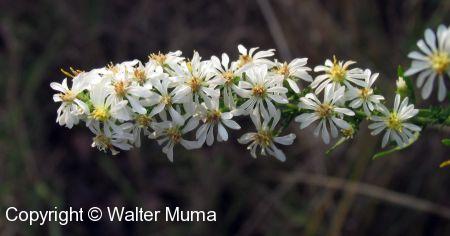
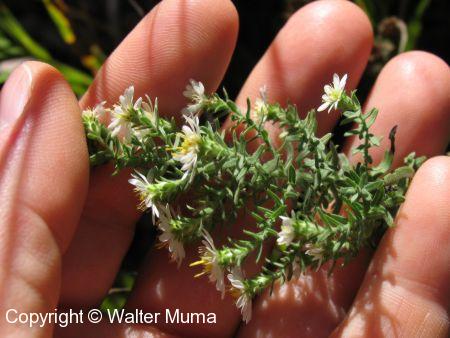
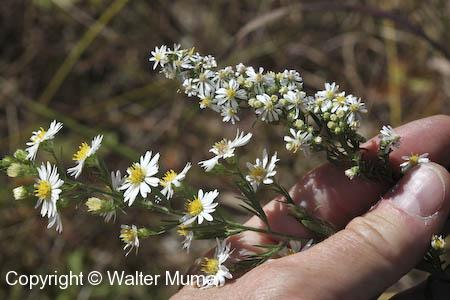
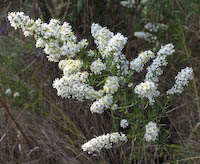
Many small white flowers, closely crowded along the stems. Small leaves.
Similar species:
•
Frost Aster (Symphyotrichum pilosum) - Densely hairy stem.
•
Calico Aster (Symphyotrichum lateriflorum) - Spreading horizontal branches.
•
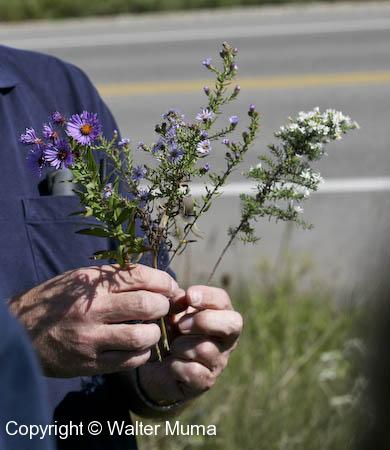
Amethyst Aster (Symphyotrichum x amethystinum) - Purple flowers, like a miniature New England Aster (Symphyotrichum novae-angliae).
Flowers:
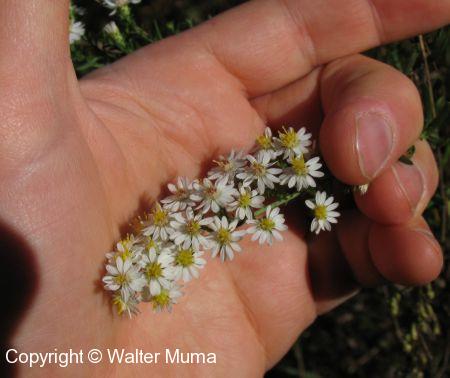
Summer, Autumn; White; 7 or more parts (petals); Small: less than 1cm in diameter. Ray flowers: 13-20, white, very short. Disc flowers: 7-15, yellow becoming brown. Spread out along branches. Densely packed, often overlapping.
Leaves:
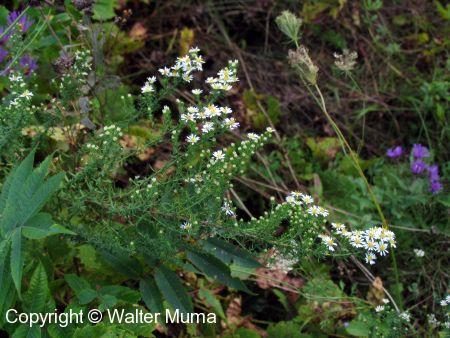
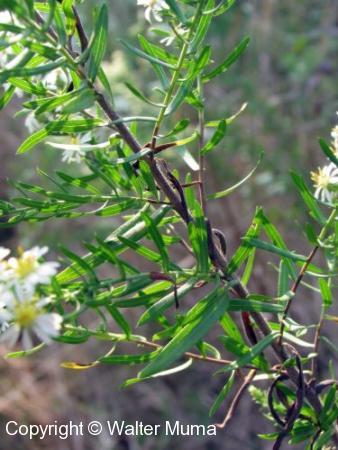
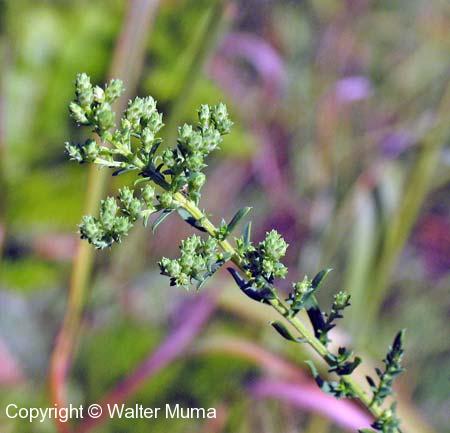
Alternate, Simple, Entire; Small, numerous, closely crowded, as in heaths. The upper stem leaves are tipped with a tiny soft spine. Lower leaves often gone by flowering.
Height:
30-80 cm (11-31 in)
Stem:
Upper stems crowded with incurved hairs.
Habitat:
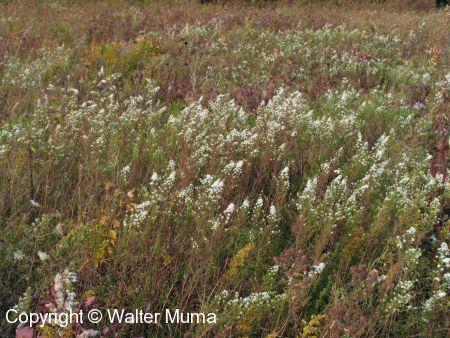
Fields and Open Areas, Meadows, Roadsides; Fields, roadsides. Grows in patches as it spreads primarily by runners and roots.
Grows in Sun/Shade:
Sun
Lifespan:
Perennial.
Books:
Newcomb's Wildflower Guide: 458
Peterson's Field Guide to Wildflowers: 96
Native/Non-native:
Native
Status:
Common.
Notes:
This is another one of the Asters that is fairly easy to identify. The closely packed overlapping white flowers are distinctive. When referring to this species it is best to use its Latin name as well, as there is at least one other Aster that is commonly called Heath Aster Aster.
Photographs:
189 photographs available, of which 14 are featured on this page. SCROLL DOWN FOR PHOTOGRAPHS.
|
|
|
|
|
|
|
|
|
|
|