New England Aster
Symphyotrichum novae-angliae
(formerly Aster novae-angliae) |
 Other scientific names:
Aster novae-angliae, Aster roseus, Lasallea novae-angliae, Virgulus novae-angliae Other scientific names:
Aster novae-angliae, Aster roseus, Lasallea novae-angliae, Virgulus novae-angliae

French names:
Aster de la Nouvelle-Angleterre
Family:
Composite Family (Asteraceae)
Group:
Asters
Distinctive features:
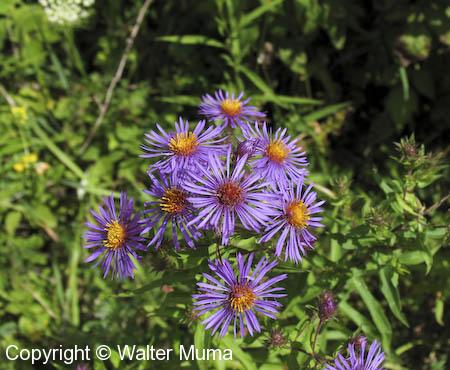
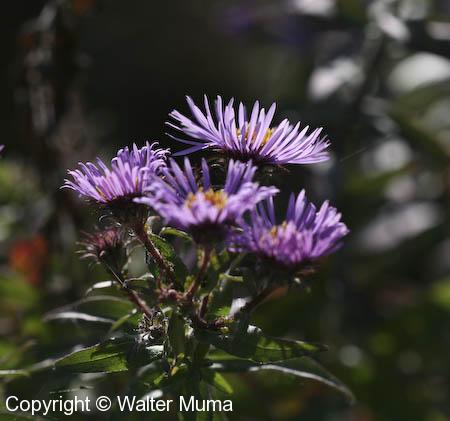
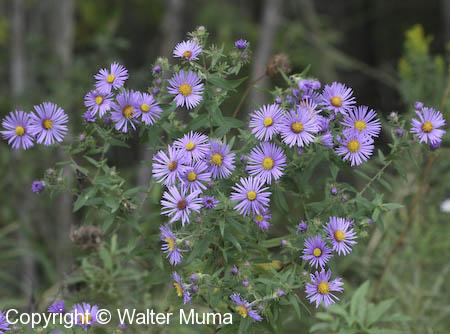
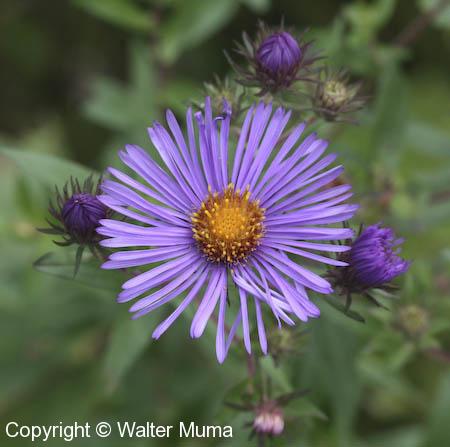
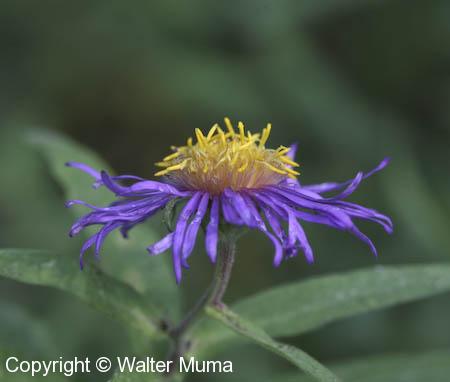
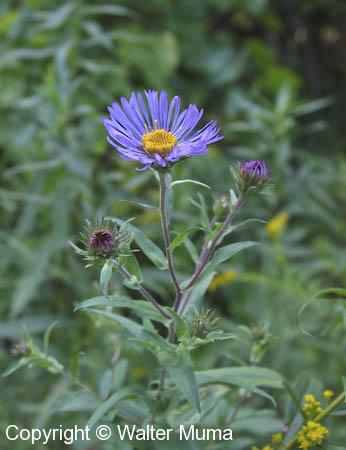
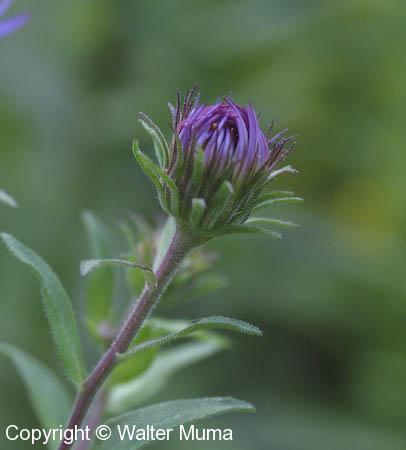
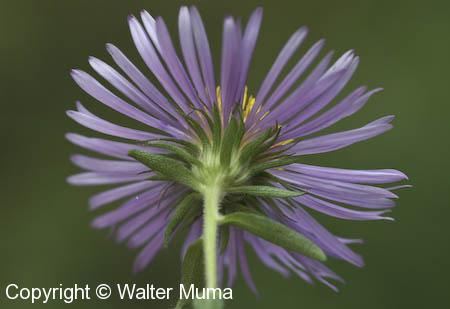
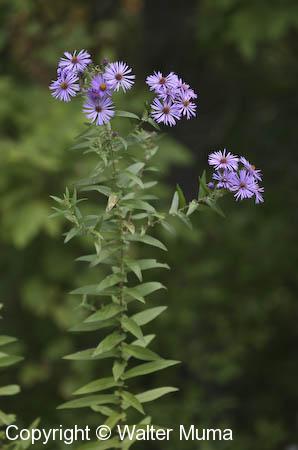
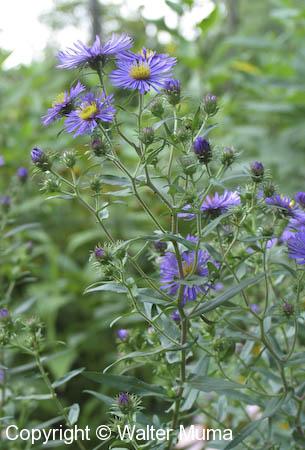
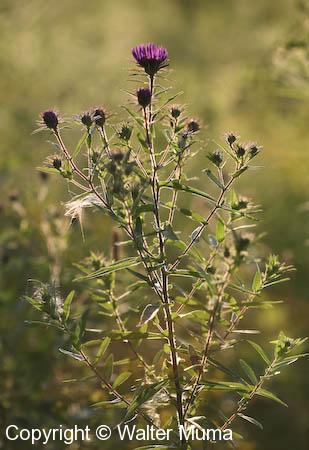
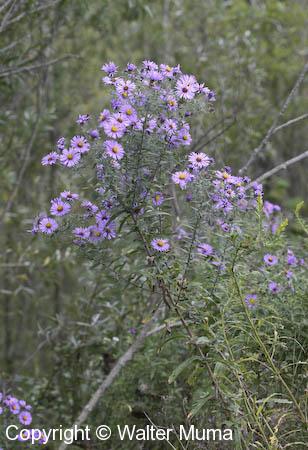
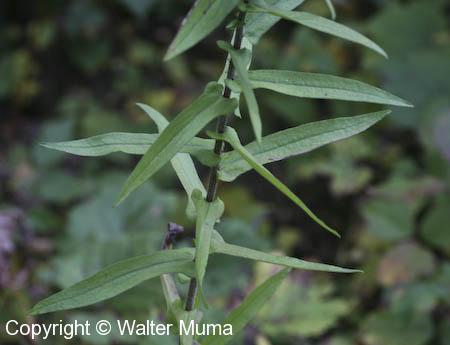
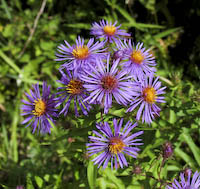
Large rose-purple flowers, with very numerous rays. Clasping leaves. Rough stem. Leaves smell a bit spicy when crushed.
Similar species:
•
Purple-stemmed Aster (Symphyotrichum puniceum) - grows in wet areas, flowers have fewer rays. Leaves do not smell spicy when crushed.
•
Amethyst Aster (Symphyotrichum x amethystinum) - a hybrid between New England Aster & Heath Aster - much like a miniature New England Aster with more leaves and smaller leaves.
Flowers:
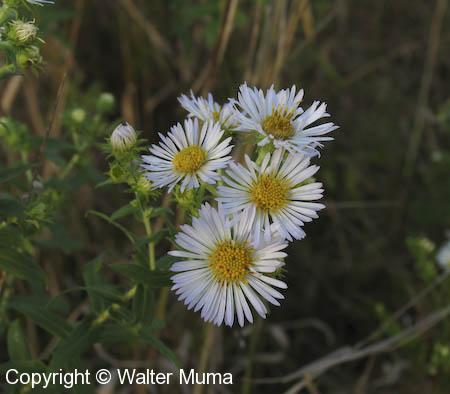
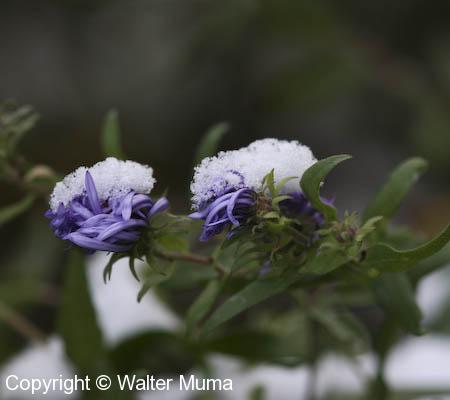
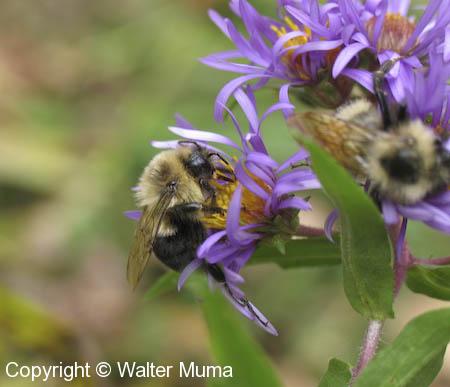
Summer, Autumn; White, Blue/Violet; 7 or more parts (petals); 3cm in diameter. Ray flowers: very numerous, 50-75, dark rose-purple to pink, sometimes white. Disc flowers: 50-100, yellow becoming purple.
Leaves:
Clasping stem. Crowded along the stem. Have three prominent veins. Lower leaves have usually disappeared by flowering time. Leaves are toothless. Smell a little bit spicy when crushed.
Height:
60-150 cm (23-59 in)
Stem:
Bristly-hairy. Stout.
Habitat:
Fields and Open Areas; Open areas, fields, roadsides.
Grows in Sun/Shade:
Sun
Books:
Newcomb's Wildflower Guide: 460
Peterson's Field Guide to Wildflowers: 308, 356
ROM Field Guide to Wildflowers of Ontario: 191
Native/Non-native:
Native
Status:
Common.
Notes:
This is the very common Aster that many people are familiar with. The very many ray flowers are distinctive. It is often sold in nurseries as a garden plant.
Photographs:
204 photographs available, of which 18 are featured on this page. SCROLL DOWN FOR PHOTOGRAPHS.
|
|
|
|
|
|
|
|
|
|
|