Frost Aster
Symphyotrichum pilosum
(formerly Aster pilosus) |
 Other common names:
Frostweed Aster, Hairy White Old Field Aster, Heath Aster, Old Field Aster, Pringle's Aster Other common names:
Frostweed Aster, Hairy White Old Field Aster, Heath Aster, Old Field Aster, Pringle's Aster

Other scientific names:
Aster pilosus
Family:
Composite Family (Asteraceae)
Group:
Asters
Distinctive features:
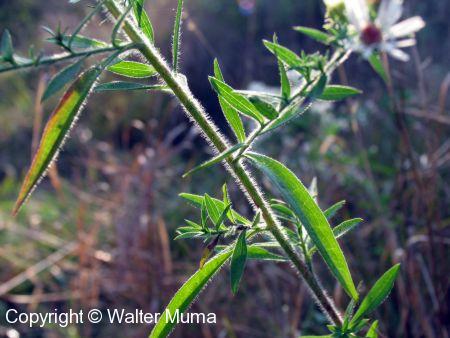
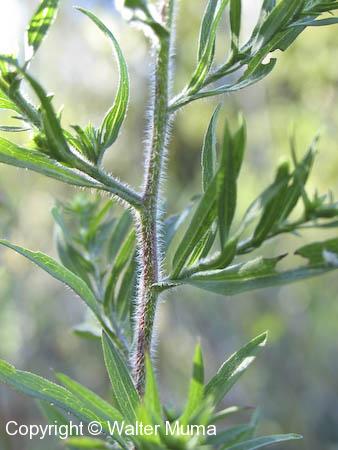
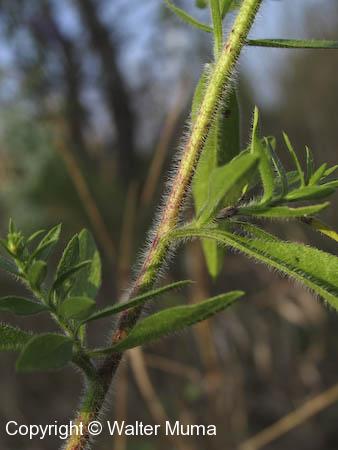
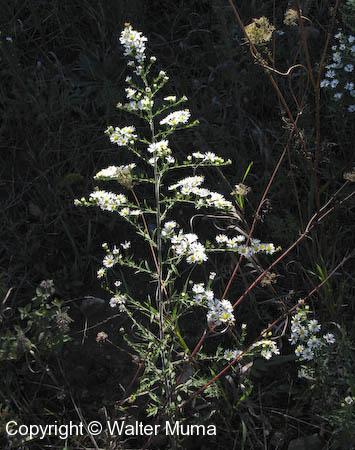
Very fuzzy stem, as if coated with a thick frost.
Similar species:
•
Panicled Aster (Symphyotrichum lanceolatum) - Stem not as hairy.
•
Purple-stemmed Aster (Symphyotrichum puniceum) - Stem not as hairy, and often purple.
Flowers:
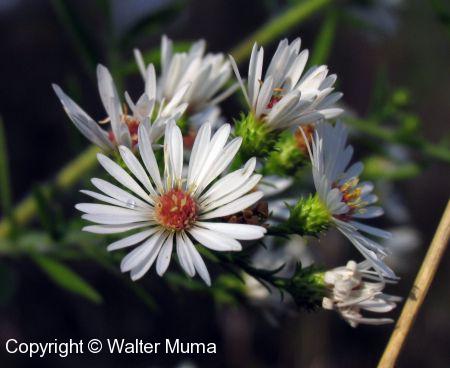
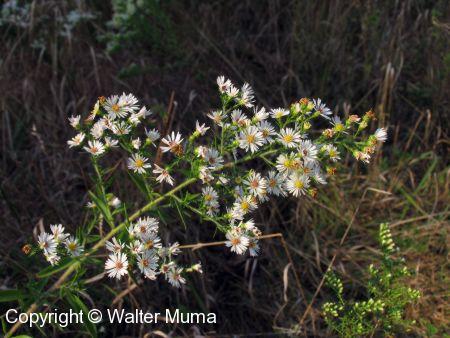
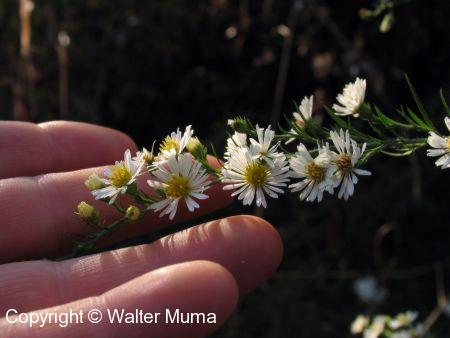
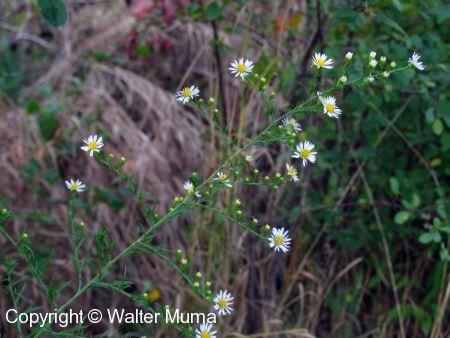
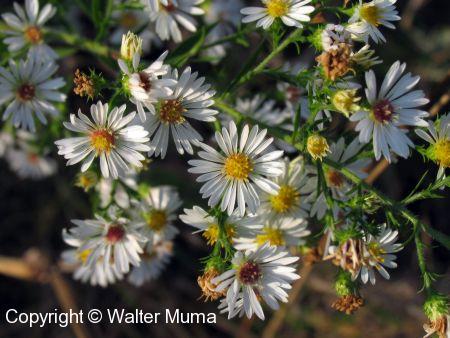
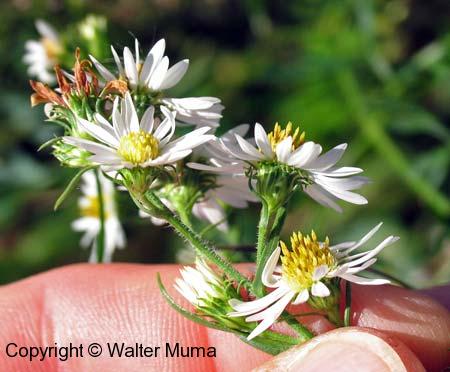
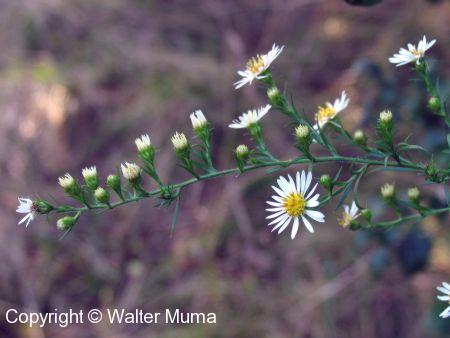
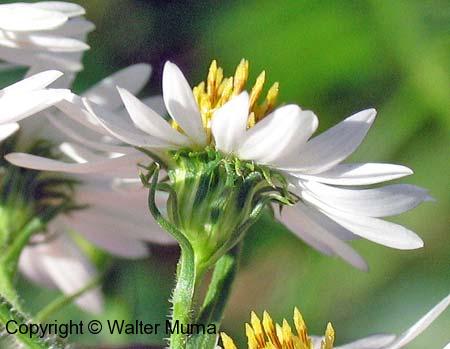
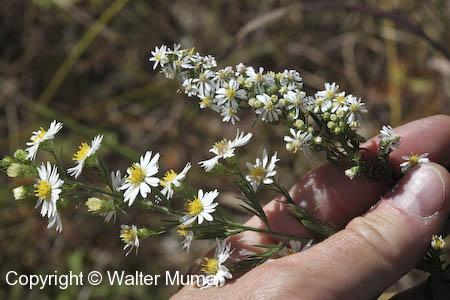
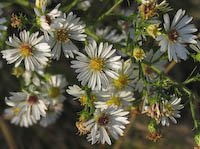
Summer, Autumn; White; 7 or more parts (petals); 1-2cm in diameter. Ray flowers: 16-47, usually white. Disc flowers: 20-40, whitish-yellowish, becoming purple. Flowers arranged in an open manner, very similar to Panicled Aster (Symphyotrichum lanceolatum). Bracts are stiff, long-pointed, and usually spreading.
Leaves:
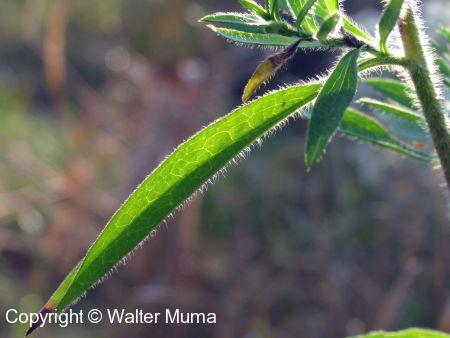
Alternate, Simple, Entire; Long lance-shaped, very similar to Panicled Aster.
Height:
Up to 1 m (1-4 ft)
Stem:
Extremely hairy - coated with numerous dense hairs that stick straight out. Looks sort of like a thick frost has coated the stem. Most obvious when viewed with backlighting, ie the sun shining from behind the stem. Just to make things interesting, there is a variety of this species that has a smooth stem! Branches stiff.
Habitat:
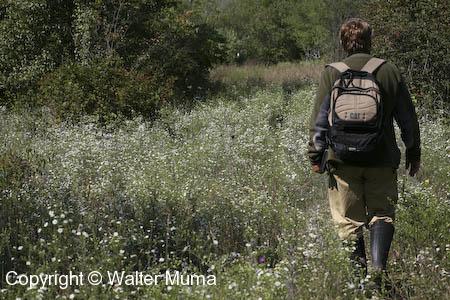
Fields and Open Areas, Meadows; Moist low areas, fields or wooded.
Grows in Sun/Shade:
Sun
Lifespan:
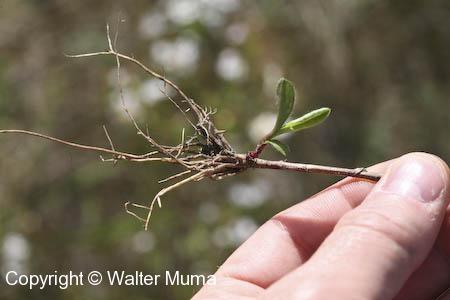
Perennial.
Books:
Newcomb's Wildflower Guide: 458
Native/Non-native:
Native
Status:
Common.
Notes:
The striking and distinctive feature of this species is the very hairy stem. BUT there is a variety of this species that has a smooth stem! This variety can get misidentified as Panicled Aster.
Origin and Meaning of Names:
Scientific Name: pilosum: soft; hairy
Photographs:
161 photographs available, of which 16 are featured on this page. SCROLL DOWN FOR PHOTOGRAPHS.
|
|
|
|
|
|
|
|
|
|
|