Other common names:
Milkweed, Silkweed Family: Dogbane Family (Apocynaceae), (Milkweed Family (Asclepiadaceae)) Group: Milkweeds Distinctive features:
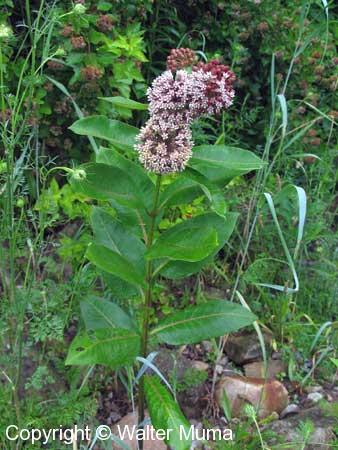
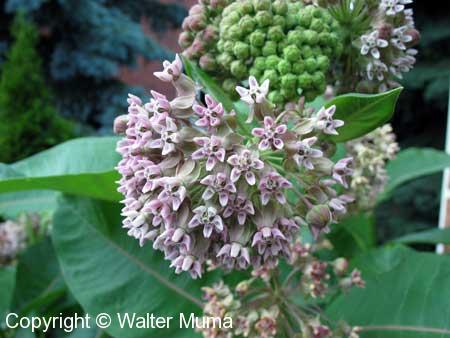
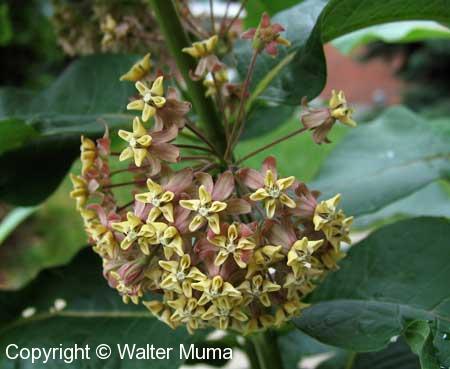
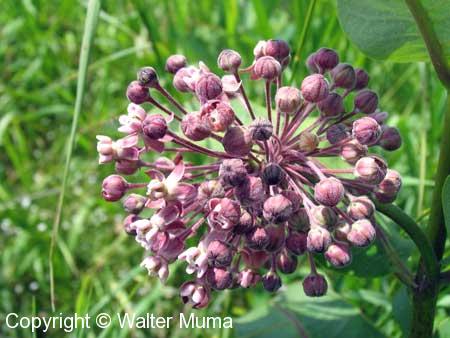
Milky sap. Very common. Small black disc-like seeds carried by the wind on silky parasols. Similar species: • Swamp Milkweed (Asclepias incarnata) • Poke Milkweed (Asclepias exaltata) Flowers: Summer; Red/Pink; 5 parts (petals); Rose to purple in a cluster at top of the plant. Typical milkweed flowers in structure. Leaves:
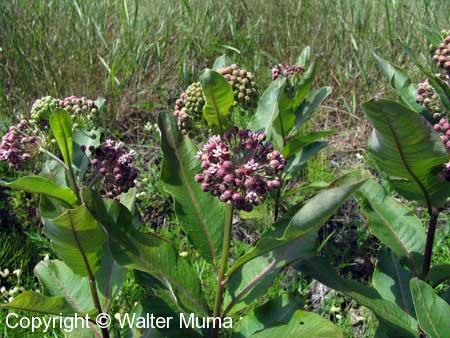
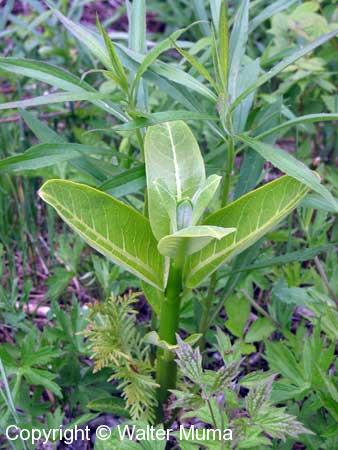
Broad, elliptical, opposite. Height:
60-120 cm (23-47 in) Stem:
Milky sap. Fruit/Seeds:
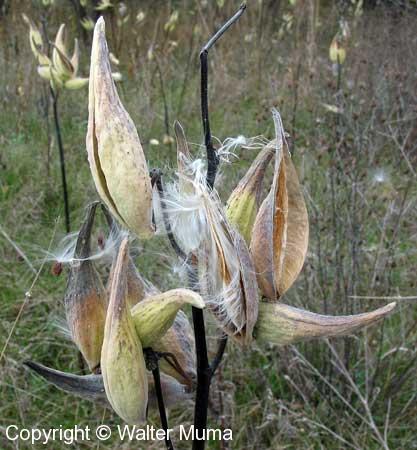
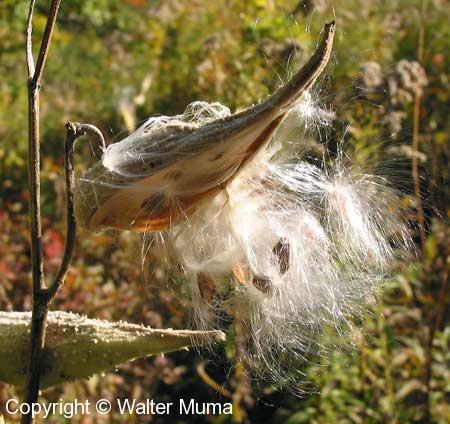
Small disc-shaped black seeds carried by the wind on silky parasols. Habitat: Fields and Open Areas; Dry open fields. Grows in Sun/Shade:
Sun Edible:
The flower heads can be fried in batter and eaten.
Poisonous:
The milky sap is poisonous.
Books: Newcomb's Wildflower Guide: 264 Peterson's Field Guide to Wildflowers: 294 ROM Field Guide to Wildflowers of Ontario: 137 Native/Non-native:
Native Status:
Common.
Notes:
Monarch butterflies and their caterpillars love milkweeds.
Origin and Meaning of Names:
Scientific Name: syriaca: of Syria Photographs:
149 photographs available, of which 9 are featured on this page. SCROLL DOWN FOR PHOTOGRAPHS.
A photo of the whole plant.
Note the broad leaves.
Flower cluster.
Sometimes the flowers appear greenish.
Flowers just opening.
A young Common Milkweed in the spring.
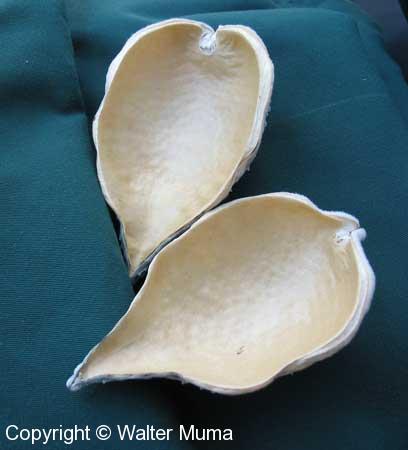
Seed pods in later summer, early fall. Once the seed pods mature and dry out, they crack open and release many seeds borne by the wind on a plume of silky hairs.