 |
|
 |
 |
Trout Lily
(Erythronium americanum) |
Other common names:
Adder's Tongue, Dogtooth Violet, Yellow Adder's Tongue

Family:
Lily Family (Liliaceae)

Group:
Trout Lillies

Distinctive features:
The bright yellow flowers are among the first to bloom in the spring. Mottled small pointy leaves.

Similar species:
White Trout Lily (Erythronium albidum) - white flowers, very similar habitat.

Flowers:
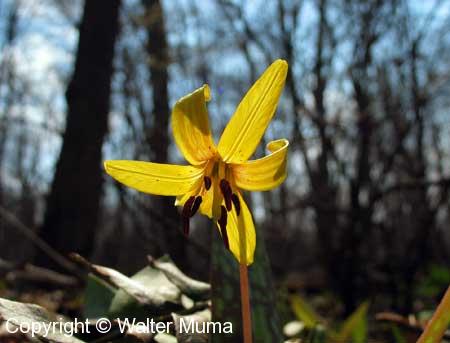
Spring; Yellow; 6 parts (petals); Solitary yellow nodding flowers. Very photogenic.

Leaves:
One or two per plant. Stiff, upright, 3-8" long. Mottled like a trout fish skin (hence the name).

Height:
7-20 cm (3-8 in)

Stem:
None, except for the flower: smooth.

Fruit/Seeds:
In a capsule, maturing as the rest of the plant dies off.

Habitat:
Forests

Lifespan:
Perennial. Disappears by early summer, to reappear the next spring.

Edible:
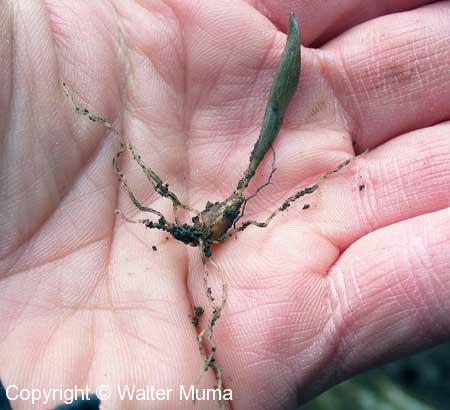
The corms (tubers) are edible raw.

Books:
Newcomb's Wildflower Guide: 338
Peterson's Field Guide to Wildflowers: 102
ROM Field Guide to Wildflowers of Ontario: 73

Native/Non-native:
Native

Notes:
These are extremely photogenic plants that dapple the early spring woods with their beautiful yellow.

Origin and Meaning of Names:
Scientific Name: americanum: American

Photographs:
234 photographs available, of which 12 are featured on this page. SCROLL DOWN FOR PHOTOGRAPHS.

|
| |
|
|
|
|  |

|
 |
The flowers.
Leaves are also visible here. |
|
 |
|
|
 |
|
 |
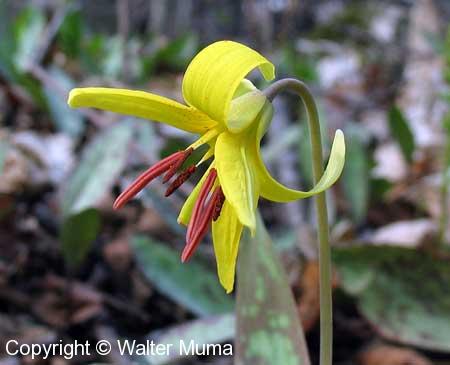
It is easy to see why I call this a highly photogenic flower!
I go kinda nuts taking photos of this plant every spring, even though I already have plenty of photos of it! |
|
 |
|
 |
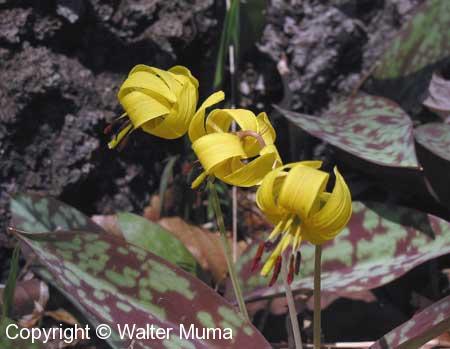
Three flowers that are slightly different - note how the petals are curled right back. This photo certainly shows why this plant is a member of the Lily Family! |
|
 |
|
 |
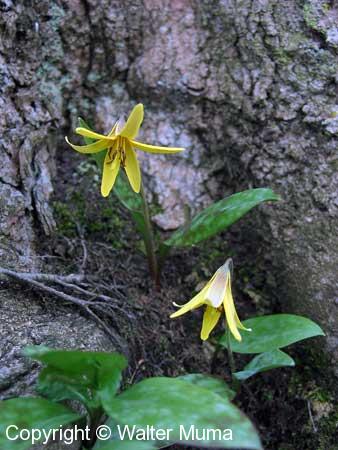
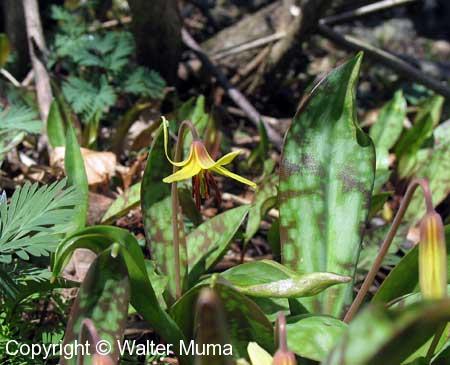
Flower and leaves. |
|
 |
|
 |
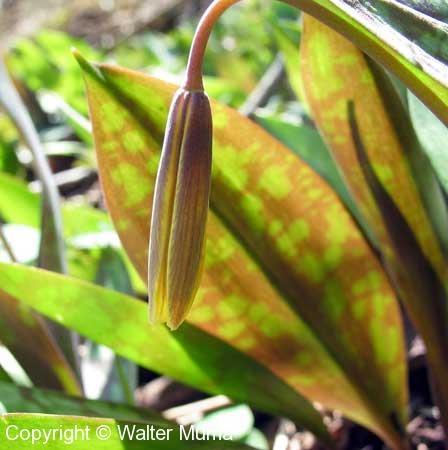
Unopened flower. |
|
 |
|
 |
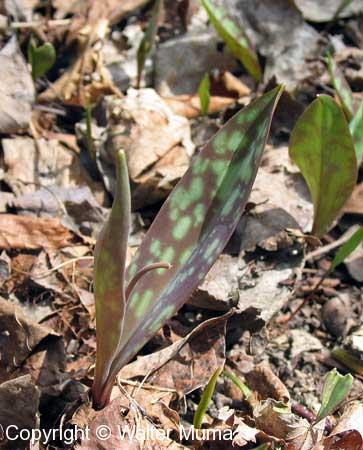
Leaves. Someone ate the flower.
Note how mottled they are. |
|
 |
|
 |
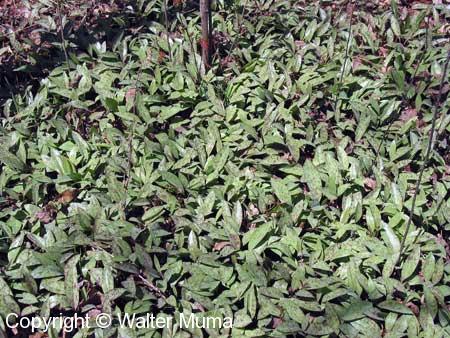
In some places Trout Lilies grow very dense, just like a ground cover. They are all individual plants, however. |
|
 |
|
 |
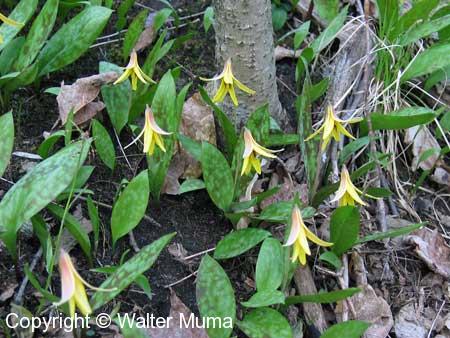
A small grouping of them. |
|
 |
|
 |
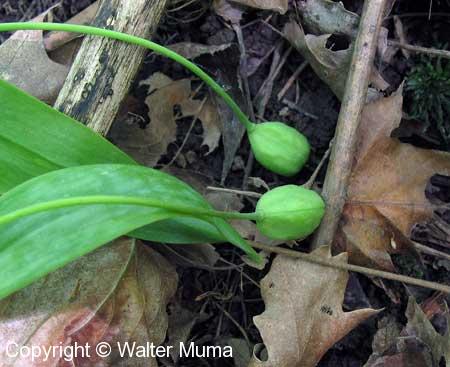
Maturing seed pods. By this time, the leaves have already started to die off. |
|
 |
|
 |
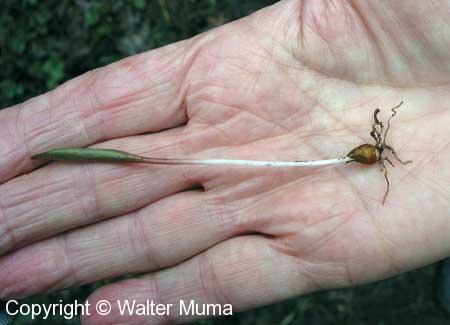
The small bulb (corm) at the bottom of the plant is edible raw. It has a very fresh taste, sort of like cucumber. |
|
 |
|
 |
Another one. Peel away the sheath, roots, and dirt, and pop it in your mouth.
There's not a lot there, but they are nice and fresh tasting.
As usual, please exercise careful judgment when collecting wild plants for food. Wild plants everywhere are under a lot of stress due to habitat loss. Best to leave them for others (birds, animals, insects, etc, as well as humans) to enjoy! |
|
 |
|
| |
|
 |
|
|