Other common names:
American Bladdernut French names:
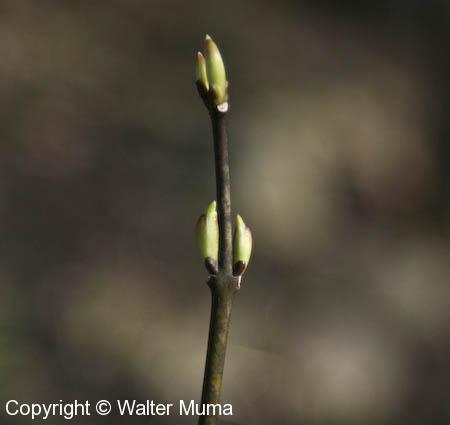
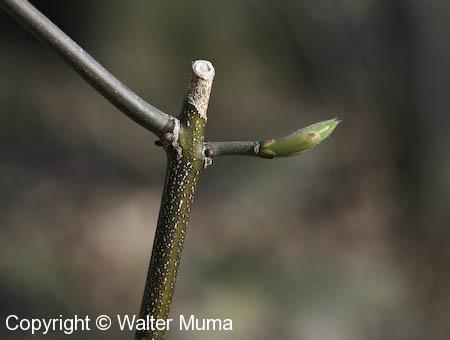
Staphylier à trois folioles Family: Bladdernut Family (Staphyleaceae) Distinctive features: Shrub; The "bladders", which are the fruits. 3-part opposite compound leaves. Similar species: • Hop Tree (Ptelea trifoliata) - leaflets are stalked. • Poison Ivy (Toxicodendron rydbergii) - has alternate leaves. Flowers: Spring, Summer; White, Yellow; 5 parts (petals) Leaves: Opposite/Whorled, Compound, Toothed; Opposite, compound (3 leaflets). Height:
3-5 m (9-16 ft) Trunk:
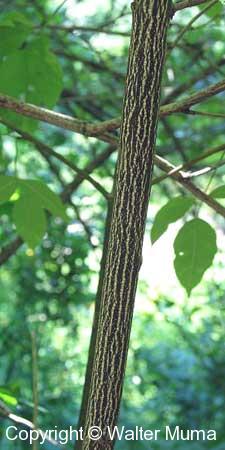
Striped. Fruit/Seeds:
Ususual "bladders" contain the seeds. Habitat: Forests, Fields and Open Areas; Rocky woods, river banks. Books: Shrubs of Ontario: 295 Newcomb's Wildflower Guide: 318 Native/Non-native:
Native Status:
common.
Origin and Meaning of Names:
Scientific Name: trifolia: three-leaved Photographs:
82 photographs available, of which 11 are featured on this page. SCROLL DOWN FOR PHOTOGRAPHS.
Range Map is at the bottom of the page
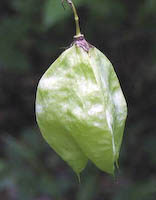
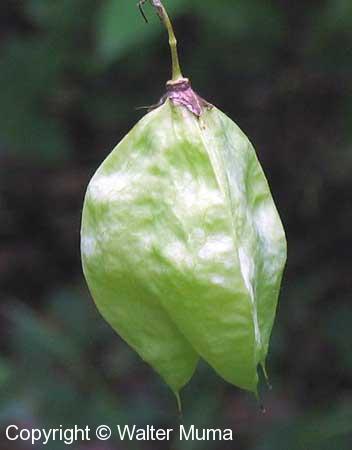
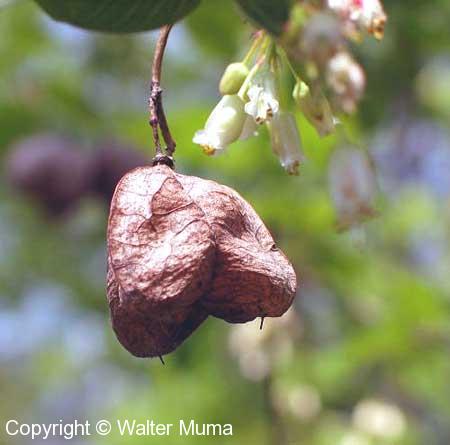
This is the unusual fruit that gives this plant its name. The papery "bladder" contains 1-4 pale brown hard seeds. They come loose later in the fall when ripe and rattle around inside.
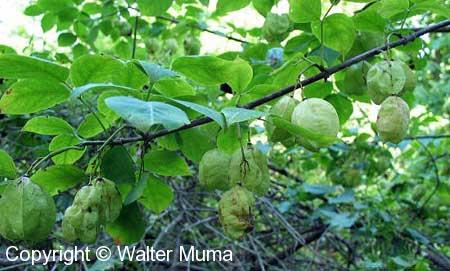
A string of bladders along a branch.
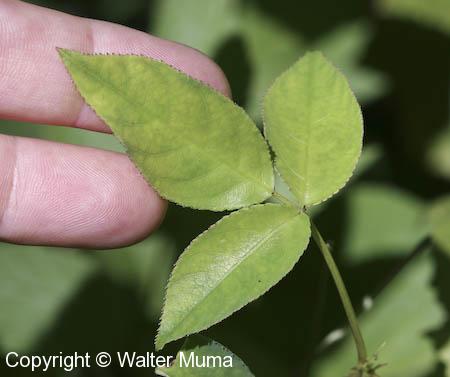
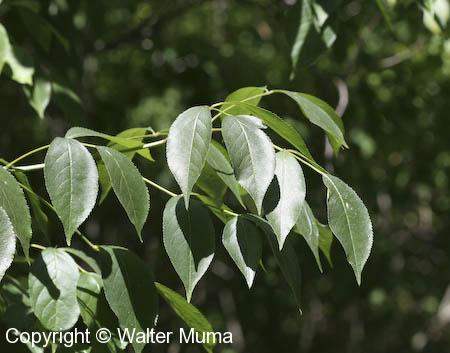
Typical Bladdernut leaf.
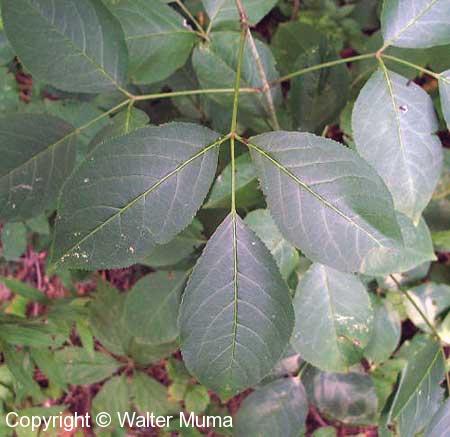
Bladdernut leaves.
The compound leaf (opposite pattern along the stems).
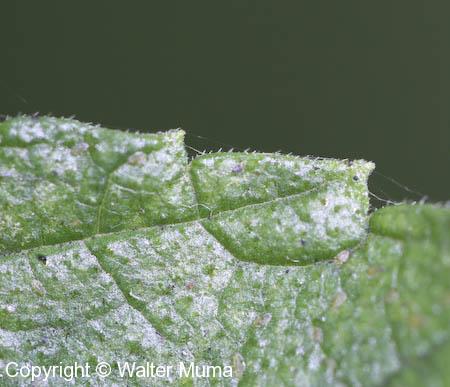
Edge of a Bladdernut leaf.
A bladder left over from the previous year. Spring flowers of this plant (in early June) are visible in the background.
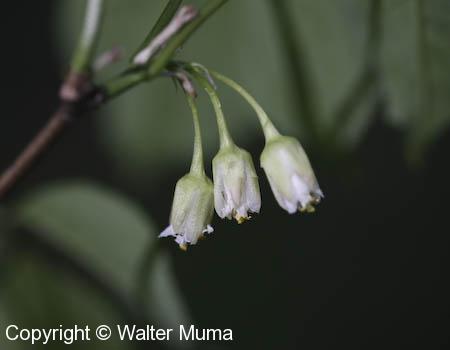
Bladdernut flowers in early May.
The trunk of Bladdernut has a striped pattern to it.
PLEASE NOTE: A coloured Province or State means this species occurs somewhere in that Province/State.
The entire Province/State is coloured, regardless of where in that Province/State it occurs.
(Range map provided courtesy of the USDA website
and is displayed here in accordance with their
Policies)